
he Group G table rarely tells the whole story. Two matches in, you might see a team sitting on four points and feel confident about their prospects. Then you check the goal difference, the head-to-head record, and the fixture list。and the picture shifts. Points are the currency, but they don't exist in isolation. I remember covering a group stage a few years back where a late equalizer on matchday two turned a likely elimination into a top-spot finish. That single Group G point was worth more than three in another context.What makes Group G points so tricky to evaluate is the scheduling. The order of fixtures often creates artificial peaks and troughs. A team that plays the weakest opponent first can bank three points early, then face two tough games. Another side might have a brutal opening pair。
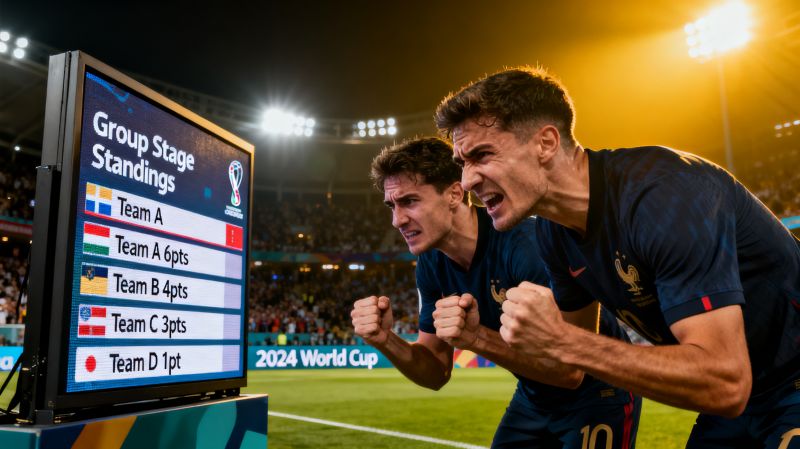
pick up a single point from them, and then look dangerous once the easier fixtures arrive. I've seen pundits write off teams after one loss, only for that team to collect seven points from the remaining two games. The point total at the end looks respectable, but the path to it was anything but linear.Goal difference and goals scored matter as secondary tiebreakers, yet they often distort how we read Group G points. A 4-0 win over a weak opponent can inflate a team's goal difference and create a false sense of security. Conversely。a disciplined 0-0 draw away to the group favorite might be a more impressive point than a chaotic 3-2 victory. Take the 2022 edition of a certain continental tournament—one team advanced with five points, another went out with four. The difference was a stoppage-time goal in a match that had no bearing on the group winner. Fine margins, indeed.Head-to-head records add another layer. In some competitions, points earned against direct rivals carry extra weight in the tiebreaker rules. That changes how teams approach individual matches. A manager might set up defensively to secure a draw against a rival, knowing that the head-to-head point could be decisive. I've spoken to coaches who admit they track the group table in real time during matches, adjusting tactics based on results elsewhere. It's a strange dynamic—playing for a point while hoping another match stays level.My own view: Group G points are the most honest reflection of a team's resilience, but only if you look beyond the raw total. Four points from three games can mean two gritty draws and a win, or a single blowout and two collapses. The table doesn't distinguish. What I watch for is how teams respond after dropping points early. A squad that bounces back with a controlled performance。
rather than chasing the game emotionally, tends to accumulate points more reliably. That's the pattern I trust, not the table position after matchday one.